Search
From the Desk of Alicia Kennedy
LOG IN
SIGN UP
HOME
ARCHIVE
UPGRADE
MEMBERS ONLY
SECTIONS
ABOUT
From the Desk of Alicia Kennedy
Dec 18, 2025
Wine Talk with Thomas Hjort
Wine Talk with Thomas Hjort
00:00
29:32
Transcript
0:00
Hi, everyone. Welcome to the From the Desk of Alicia Kennedy podcast, a semi-regular series of conversations on food, culture, sustainability, travel, et cetera. Today I'm talking to Thomas Hjort.
0:12
He is the sommelier at the Ark Collective Restaurant Group in Copenhagen, which serves only plant-based cuisine and has its own fungi farm, growing mushrooms.
0:23
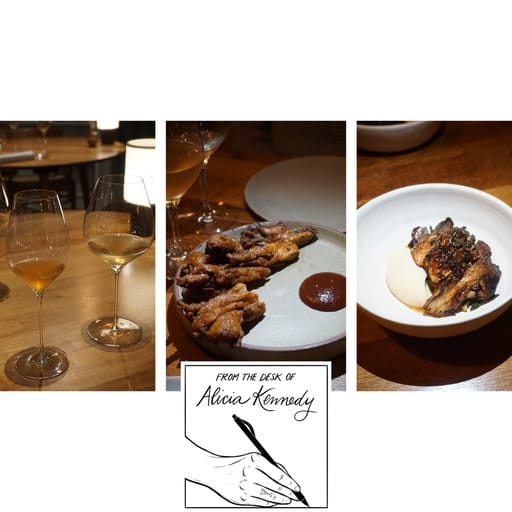
I wanted to talk to him about pairing wines with plant-based foods, the tensions between sustainability desires of clientele and plant-based realities, Danish wine, the Copenhagen restaurant scene, and a bunch of different stuff.
0:40
We had a, a nice little conversation, and it added a lot to how I understand my first trip to C- that city.
0:50
And so I'm really excited to go back, really excited to eat more, drink more, and understand a little more, have a little bit more context for it.
0:58
If you want to read about my trip to Copenhagen and access my travel map, go to aliciakennedy.news. I really just wanted to get, you know, just a sense of how you approach the wine list at, at Ark.
1:15
Um, and do you- Yeah... do the wine list for all of the restaurants or just for Ark? I do, yes. Yes. For all of them. And they had some... Yes. Okay And they had some of, of Ark collection. Uh- Okay, cool...
1:27
but I have my daily routine here at, at, at Restaurant Ark. Okay, cool. And so how do you approach it differently? Because, yeah, when I was there I did eat at Ark and at, uh, Lupa, and- Yeah...
1:39
y- yeah, how do you approach each wine list differently? So, uh, each wine list is more or less build up on, on how the, the, the clientele is, uh, our guests.
1:55
Sure Um, but also what style of wine fits the food that is in the restaurants itself. Mm-hmm. Um, Lupa would be a bit more in a classical sense. Everything is natural wine, that goes for- Right... all of our restaurants.
2:14
Uh, but, but the flavor profile of the wines at Lupa is more classic and less daring. Mm-hmm. Uh, as that is what the guests of Lupa, uh, expects the wines to be. Um- Right...
2:28
where at Ark we try to push the boundaries a bit more. We do have- Mm-hmm... a lot of wines that is more classical, uh, in its flavor profile, aroma profile. Yeah. But, but we also tend to go a bit more funky, uh- Mm...
2:45
a bit more daring, um- Yeah... to work more precisely with the food that we have here at, at Ark. Um, and we- Yeah... have more
2:57
time at Ark to go in depth with explaining the wines and having a bigger wine list, um- Right... and a bigger range to choose from. Right. And how are you defining natural wine? Yeah.
3:11
[laughs] So natural wine's a bit difficult, uh, to define, 'cause- Yeah... there's not a precise rule set, uh, about natural wines as you have in conen- conventional wines- Right...
3:21
uh, with the appellation systems and all that. So natural wines is a little bit of an umbrella, uh, kind of where we're using for, for everything, uh, that is naturally made. So- Mm-hmm... it would be the somm
3:38
in the restaurant that would define their version of natural wines. Right But in sort of a general understanding of natural wines, uh, we use indigenous yeast. So- Mm-hmm...
3:49
it's spontaneous fermentation, no laboratory yeast. Uh, we have low intervention when- Mm-hmm... uh, making the wines. We try to use as little sulfites as possible. Uh- Mm-hmm...
4:02
seeing a general understanding is below 30 milligrams of sulfites per liter. And then just
4:09
the work in the, in the vineyards is, is without chemicals as much as possible, trying to, uh, take care of the environment and the biodiversity and bioculture, uh- Right... around the vineyards.
4:23
And so, I mean, for you, how, as a s- as a somm, how do you define natural? Are there parameters that you are in particular keeping top of mind that someone else might not? Uh, I think I'm a little more...
4:40
I'm, I'm, I'm, I'm prone to that version that I just- Yes... explained- Yeah... here, where there would be some somms that would define it as a zero. Zero is the only natural wine- Exactly, yeah... uh, wine-making,
4:53
uh, way of doing natural wines. Uh, we can al- there is also some who's less obsessed with the amount of chemicals and- Right...
5:01
the amount of sulfites, uh, using more classical wine producers that has also started to use indigenous yeast and spontaneous fermentation theref- there by that, um, but still using quite a bit of sulfites and new barrels and all that.
5:17
Mm-hmm. That- Yeah... the sustainability part of is quite a complex parameter to work with- Yeah...
5:24
'cause it's, you know, to get that flavor composition that you expect from a big burgundy wine, you usually have to use new barrels.
5:31
But there's a sustainability issue with always using new barrels and chopping down forests. So using old barrels would be more sustainable, but you don't, won't get that heavy oak, uh, feeling on the wine. Right.
5:45
And so how do you keep sustainability top of mind?
5:48
'Cause I remember when we were doing the pairing, they were talking about a wine that comes in on a sailboat and then is bicycled over, and, and, you know, that, that aspect of it is seemingly very important.
6:00
And so how do you, how do you measure the sustainability of a wine when you're putting it on the menu?Uh, it's... To begin with, it's, uh, taking in importers, uh, working with importers- Right...
6:11
is having a conversation about what we need, uh, how our views on sustainability and natural wines are, and what, how we define it and what we, what is too much for us. Mm-hmm.
6:25
Starting there is already, uh, in, like, choosing a range of the wines, uh, that comes from, from, from the importers. And then
6:35
from that, make it and fit into our ethos and our way of, of, of running the restaurant, uh, uh, and, and our core beliefs, uh, on sustainability. And
6:47
working with wines that, for example, comes with the Tres Homeres boat from, from Loire having a zero emission all the way to Copenhagen canals from the Loire Valley, and then have been biked from the Copenhagen house to our restaurant, would be something that we would try to work with as much as possible.
7:05
Right. Right. Most of our importers are driving the, or, or biking the, the wines to, to the restaurant. Mm-hmm. Uh, and, and we try to use the, those importers more than, uh, importers that are delivering by, by car.
7:21
Interesting. Um- That's so great... with the pairings, we usually have the conversation and, and try to look in depth on
7:29
what particular vinification styles or work in the vineyards that the, the winemakers, uh, are using, making sure that it fits within our understanding. Mm-hmm. Um, and then in the same time, trying to
7:46
challenge a little bit, uh, our way of thinking, uh, wines as guests.
7:54
Instead of using, always using, uh, Barolos and, and Burgundies, trying to choose wines that comes from, from areas that we don't necessarily always drink wines from, from Czechia, Slovakia, uh, or Georgia, something like that.
8:08
Uh, or, or grape varieties that are a little bit more difficult to pronounce that we don't meet as often. [laughs] Right. Uh, so, so it's a big...
8:19
It's a very complex thing to work with, but it's, it's woven into, into the way we work every day. Mm-hmm. So it comes kind of naturally, uh, choosing the wines
8:33
for the pairings would have to fit in within the parameters that we're working with every day anyways. Right. Um- And can... Yeah. And can you tell me a bit about pairing with plant-based dishes?
8:46
Because I know the, I, at least, um, in the US, people get a little bit touchy about how you can pair wines with, with plant-based food and, and how it, it kind of upends the, the natural order of things or the common rules for things.
9:02
So how are you, how are you thinking about the dishes and, and the pairings as you prepare them? I see more opportunities with natural wines, uh- Yeah... compared to conventional wine making.
9:16
There's a lot of, of compositions and, and aroma profiles that's found in natural wines that is- Mm-hmm... set of flaws in, in conventional wine making.
9:26
Take something like reductiveness or what we can also be like small, a funky hint to the wine. Um, uh, would it be horse stables or gunpowder or something like that?
9:36
The thing that 10 or 15 years ago were a little bit too popular in Copenhagen. [laughs] Everything had to taste like something that took out your teeth because of too much volatile acidity. Uh, but, but if you...
9:49
Today, we have more wines that has these reductive tones very well incorporated into the wines.
9:55
And for me, working with that kind of reductiveness gives me a new tool working with things that are more difficult to pair with, uh, like onion or ramson or something that's, that's quite aromatic and can be difficult to pair with, or mushrooms and the earthiness and those, those sorts of things.
10:15
Uh, and, and taking that reductive tone or that funkiness, uh, into play working with, uh, with pairings gives me an, an advantage to amplify the earthiness of a dish. Yeah.
10:30
Uh, or whatever direction we, we wanna take it. Yeah. So that's- That's- The natural wines has a broader perspective or it's a broader range of, of structures and, and aroma profiles to work with. Uh,
10:45
working with our food is quite elegant and delicate. A lot of small but quite intense flavors composed into one dish where everything works perfectly, perfectly together.
10:57
Working with those niche edges of our importers wine lists or, or, uh, or portfolios gives me an advantage to, to hit that, that pairing more perfectly, uh, than others. We, we have strong...
11:15
We use a lot of energy on, on our pairings. We've- Yeah...
11:18
I myself have been in, uh, had many pairings at restaurants where I was, I was poured a, a great glass of Chablis, uh, that had some specific amount of meters above sea level and, and a lot of pretty words, but I didn't have any idea why I was drinking this wine.
11:34
Like, why... I, I understand it's a great glass of wine- Yeah... but why am I drinking this wine? Why did you choose this specifically? Why does it matter that it has, it's been grown on a specific meter above sea level?
11:46
Uh, what, why, what is the reason you're telling me about sun exposure? All these kind of things. So we wanted to flip it the other way around and I, and focus a lot on the whys of making the pairings. Mm-hmm.
11:58
Explaining and having a bit of transparency for the guests.
12:01
Like, we chose, we, we, we taste a lot of different wines, but we chose this one particularly because this wine enhanced something, or it-I took the dish in a, in a different direction.
12:11
Like, this is a very umami-rich dish, and we wanted to amplify the umami-ness, so we wanted to make it more fresh, or the acidity cuts through fatness here, or it counterbalances acidity in food here.
12:22
Tannins open up a bit of, of, of, uh, flavor profile in a mushroom because of the proteins.
12:28
Ha- having that, the, the why as the f- as the forefront is, is, is very important for us so that our guests understand why we chose this in particular. Also, if I have- Mm-hmm...
12:41
if I've chosen a, a very odd wine from Czechia, it's not just because I think it's cool, but we're actually working with it for a reason. And when we put those things together,
12:52
I see that our guests are broadening their own views on, on wines, seeing that there is more than just the regular three areas that I'm always drinking wines from.
13:02
Uh, from now on, I can also, when I'm looking at a wine list, I, I'll, I'll dare go to Czechia, Slovakia, uh, and, and pick out a wine because at Arp I had a wine that fit this kind of food perfectly or broadened my view on this.
13:17
Right. The Ark collection is famous for its- Yes... mushrooms, of course. So can you tell me- Yes... about pairing specifically with mushrooms? Mushrooms can be a little bit difficult to pair with sometimes. Mm-hmm.
13:30
Uh, but it... In general, we can work, we work a lot with orange wines when it comes- Right... to mushrooms. Uh, 'cause it, it has that small tannin bite. Mm-hmm.
13:43
But the density of proteins in mushroom is not as, uh, as big as in, in, in, in meat. So we don't need the, an insane amount of tannins to open up flavor.
13:53
But just a tiny bit, that's usually what you find in an orange wine. It's enough to, to open up, uh, more flavor, uh, for the mushroom.
14:01
And then when you macerate with, with, uh, green grapes and make a white wine macerated into an orange wine, you get often this kind of earthy aroma profile in the food that fits perfectly well with the, um,
14:17
with the dish, the mushroom dishes itself. Mm-hmm. Compared to a lot of... You need... If you wanna work with that,
14:24
that earthy feeling, you can use, uh, something that has a lot of oak, uh, flavor to it or something that's very terroir driven.
14:31
And my thoughts would always go to Burgundy and a pinot noir, a very classic, it's classical pairing. But trying to choose something that's a bit different would be an orange, orange wine that- Yeah... uh,
14:47
having a bit of a f- fresh, uh, fresh taste to the, to the dish also. Yeah. So we look at Copenhagen as this place of, like, really exalted place- Yeah... for gastronomy, right? And so- Yeah...
15:01
when you're doing plant-based food, does, is there a reaction to that?
15:06
Um, like, do people find there to be a tension in sort of how, how Nordic cuisine or Danish cuisine can be approached, uh, through this kind of vegan lens?
15:20
For, for us, uh, s- I think plant-based food, sustainability, for one, is definitely- Right... something that people seek. Uh- Mm...
15:30
we have a lot of guests that, uh, that comes to our restaurant because they search on the Michelin guide for the Green Star. Mm-hmm. Yeah. Uh, so it's, it's definitely on, on people's minds.
15:40
They wanna, they wanna have something that is on the sustainability, uh, part of, of the food cuisine. Uh, and that probably came with, with Noma, uh- Right... in the beginning.
15:50
The new Nordic cuisine and, and foraging and all these things, it definitely had a big impact on, on, on the, on our guests today also. Plant-based is probably where it gets a little bit more difficult, 'cause
16:06
even though people would like to eat more plant-based and they care a lot about sustainability, I think a lot of people had had kind of sad experiences with- Yeah... with plant-based food before.
16:18
And I mean, we all try to...
16:20
Have been sitting at a restaurant and then there was supposed to be a, a vegan option or a vegetarian option, and then that, where whatever the rest of the table had to just swap that for a very sad piece of cauliflower that was torched a little bit too much.
16:35
And I think people are afraid that they're gonna leave a plant-based restaurant still f- uh, still empty, not feeling full enough or having that kind of sad experience.
16:46
Um, compared, like, what we're doing is really putting an emphasis on making, having that umami richness and, and making sure you have a full filling meal.
16:55
And usually, when we have guests here that, uh, experience the entire menu, not knowing it's, it's plant-based, they go, always say that, "Oh, we didn't even, uh, I didn't even need meat." Mm-hmm. Like, it's,
17:08
it, that, that's the kind of the, the, the way of thinking that you need meat on the menu to be full and to have that fulfilling restaurant experience. So there's a bit of two sides to it.
17:20
There's, there's the sustainability that everybody wants, but then there's the plant-based that everybody's a bit afraid of. Yeah. [laughs] No, and that's- And then there's-... that's a really interesting tension, yeah.
17:31
It is, it is an interesting tension. It's, it's, uh, we, we have a lot of conversations in the restaurants with our guests about this.
17:37
And then I, I believe that when they leave our restaurants, uh, they, they have a new view on, on, on plant-based food, um- Right... that they're taking with them. But we need...
17:49
They, they had to convince themself to go here to begin with. Right. Well, I also wanted to ask, and this might be...
17:56
This is a more general question, but when, in Copenhagen, I was noticing that bottles of wine at restaurants were very, to me as a New Yorker, like, they seemed quite expensive versus- Yes... the glass.
18:09
V- and so can, can... I don't know if you have any insight into, into that. Like, why, why is wine a bit pricier there? For one, there is, uh, the alcohol taxes. Uh- Okay...
18:20
it is, it's, it's quite, uh, expensive just to begin with, uh, uh-For, for, for wine, uh, to, uh... It becomes taxated, and then the price goes up from there. Uh, and then demand is also, it's this...
18:38
Restaurants always have, uh, quite a high markup in, in Copenhagen on, on wines. And competing with other restaurants- Mm-hmm... pushes up the prices of, of, of wines. Yeah.
18:51
It's always been very expensive to, to, to drink wine in, in, in Copenhagen. Exactly.
18:57
But in general, re- rest- restaurants, like, everything that is within, like, all sorts of taxes also on the food is, is always, uh, is always expensive, um- Mm-hmm... running a restaurant in Copenhagen.
19:09
And we're so many, we're so many restaurants in, in- Right... in Copenhagen competing on the same. And the quality of the restaurants in Copenhagen is very, very high. Mm-hmm.
19:19
Um, even the, the, the, the bad restaurants are very good. [laughs] So, we're always competing with the top. We wanna be even better and, and that's just, that, that's expensive to be there. Uh- Yeah...
19:33
using local organic produce all the time, which we should, but that is more- Yeah... expensive than using something more mass-produced, um, and which is worse for the environment.
19:43
We had the, the, the best sustainable wine list in, in Denmark in the la- in the past three years. Yeah. Yeah, I saw that.
19:50
Um, and a lot of, and a lot of that also comes down to, to how we, uh, our transparency, uh- Mm-hmm... with our guests. I don't know if you had a, uh, if you saw our, uh, the, the extended wine list. I don't think I did.
20:04
'Cause in ex- 'cause in extended wine list we put in a distance from- Oh, cool... our front door to the- Yeah... wine regions around the world.
20:12
And the idea is to create a conversation or a consciousness about your choices. You choose a wine that is 1,050 kilometers from here, while you could have chosen one that is 30 kilometers- Right... up north, right? And
20:28
I'm not saying that you should choose either or. I just want you to be conscious about the choices that you make, 'cause there is a lot more to talk about when it comes to wine and sustainability. Are, uh...
20:40
How much sulfites are we using in the bottles? Uh, how mu- many chemicals? Is it regenerative farming? All these kind of things.
20:47
We talked about Tres Hombres before and, and the zero emission boat from, from the valley to- Right... to the canals.
20:54
Is that more sustainable or less sustainable than something that's been used, uh, made with many chemicals here in, in, in Denmark? So putting that, having that transparency in our wine list
21:07
is trying to start the conversation and making the choice that you're making conscious- Mm-hmm... to you, so you're, you're aware of what choices you're making. Which kind of fit into our ethos as the restaurant, right?
21:18
Because we're not trying to preach or, or... Uh, we know we're also, we're not perfect, but we're trying to be honest and, and we're trying to create this, this awareness around everything we do.
21:28
That's why when you had dinner here, there's, there's a lot of storytelling and there's a lot of- Yeah... letting you know how we do and what we do.
21:35
Our mushroom farm, uh, that's sustainable mushrooms the whole year round that, uh, we also sell to, to privates and to other restaurants. Uh, our foraging from, from March to November, uh, trying to
21:48
take what is, uh, aroma givers that's found in nature instead of buying something mass-produced. And, and having those conversation also goes into the wine list. Um- Right...
21:59
and we also put in symbols in the wine list for, uh, what has been biked here by importers, what is- Mm-hmm... without added sulfites, and what has been with a boat. So you can actually choose from the list what is
22:12
supposedly the most sustainable choice. Right.
22:14
If you have something that's been biked here and with boat and does not contain added sulfites, you're probably getting quite a funky wine, but this is one of the more sustainable wines that you can choose from.
22:23
And giving that choice back to the guest is- Right... creating a very fun conversation and, and dialogue around, uh- Right... around those, around the subject of, of sustainability. Right.
22:38
Well, and so that also brings me the question of, of Danish wine and, and what is the role of Danish wine on the list in term- Oh, I love to talk about Danish wines. Yeah. [laughs] Um, Danish wine, uh...
22:52
I could talk about forever about Danish wines. [laughs] Uh, so Danish wines used to be something that was probably made at home, served for guests for more purpose than flavor.
23:08
Uh, I don't think they, I don't believe they tasted very well, but they made the parties funnier. [laughs] We had do- We don't have a long tradition of, of making wines. Uh, so this started quite late.
23:23
We had to figure out how to use grapes that is working well within our climate. Um, and then we had to figure out how to vinify that. Local wines are becoming, or Danish wines, becoming more and more, uh, common.
23:41
Natural wines. Mm-hmm. Not necessarily for the regular Dane. They don't always know that we do make great wines.
23:49
But in hospitality, we get to see more and more winemakers, uh, selling to restaurants, and the quality of the wines are starting to look like something that we can be quite proud of.
24:00
The last vintage and this vintage is looking very, very promising. We found a way to control the very harsh acidity that's found in PV grapes.
24:10
This, this specific kind of grape that we're using often in Denmark because of spring frost and the harsh climate in general. Mm-hmm. Lack of sun also. That creates a very high, uh, tingling,
24:24
bitter acidity, uh, in the wines, and we've-Found a way to mask that kind of acidity, which can sometimes throw people off.
24:34
And once you don't realize that acidity there, is we're slowly trying to reach some kind of quality wines that can resemble wines that we're finding in, in other well-known wine areas of the world. We always have,
24:49
uh, Danish wines, uh, by the glass. We alway- always have it on the list, and we almost always have it on the pairings. Mm-hmm. I'm not choosing it just because it's Danish. Uh, it, it has to work. I'm not forcing it.
25:03
I don't wanna do a bad pairing- Right... just because it's Danish, but, but the range is, is, is big enough for me to almost always have a, have a Danish wine on, on the, on the pairing.
25:17
And talking about the Danish wines is very important for us.
25:20
We're trying to really put the word out there about Danish wines, and we love on Saturdays to open up a couple of Danish wines and pour it at the tables and have that conversation about Denmark becoming greater at making wines.
25:32
Um, you can't find it in stores. Uh- Mm-hmm... you don't real- you have to buy it directly from the wineries, and they're not making enough, uh, to pick, for, to put the price down. They're still
25:47
a bit expensive compared to each would- be local wine. If you have a local Spanish wine in Spain, you would- Mm-hmm... expect it to be quite cheap as a tourist.
25:56
In Denmark, you're g- it's gonna be the same price as the medium r- uh, price range h- here at Ark.
26:03
So we have to, we have to put the word out there and let people taste it and put it into, into play with the, with the food to, to open up the, the, broaden the view on, on Danish wines for both the tourists, but, but just as well for Danes.
26:17
Right. Uh, and, and, and it's starting to look, uh, look quite awesome for, uh, for Danish wines. Exporting, uh, let's, let's see when, uh- [laughs]... when we're g- when and if we're getting there.
26:29
But, but this is a very big focus, uh, focus of ours, uh, at Ark and at Ark Collection. Mm-hmm. Um, I'm working very closely with, uh, with, uh, with the Danish winemakers, uh, that, that we have here, uh, at Ark.
26:42
And, uh, and I'm, I'm, I want n- by next year, hopefully I have made a, a, a whole part of the wine list that is only local. Amazing.
26:51
With more information about the wineries that is here in Denmark, um, go and visit them. I have a conversation about their practices 'cause they're usually way more natural than a lot of other winemakers in the world is-
27:05
Mm-hmm... using zero sulfites and using zero chemicals.
27:09
Um, and, and if I could have a wine list that was only Danish that you could look at, and then also get to know the producer behind it, just a smaller read, I think that could, uh, that could help put the local wines into, into play here in, in Copenhagen.
27:25
Amazing. I know there are some restaurants in, in, in Denmark that are, that are focusing on a lot. Uh, Restaurant Domestic in, in Aarhus is, is having a, a, a local pairing. Uh, Matias is a genius guy.
27:36
Uh, so also trying to, to put out the, the word, but, uh, it's a slow process, but, uh, but we're getting there. Yeah. And I think that, uh, most Danes have tried Danish wines, uh, five, six years back.
27:50
Uh, we maybe put out on holds on trying new wines- [laughs]... 'cause there, there's been some, uh, some weird ones in between. [laughs] Interesting. Um, we- But we're getting there.
28:01
The grape varieties that are common in, in Denmark is, it's a range of different... We're using- Okay... usually using Solaris, uh- Okay... for the whites and, and Rondo as the red.
28:10
We're also, uh, using a Sauvignon Gris, and Johanniter is one of the grapes that I see is, is going to be, or I believe is going to be the big, uh, grapes of, of, of Danish wines.
28:22
But all the grape varieties is called PIWI grape varieties. Okay. And that's, that's a range of, of, a, a type of- Right... of grape. Yeah. Okay, cool.
28:32
That, and then there's a lot of different smaller grapes within the, uh, the PIWI, the name of the, or the, the group of- Right, right... the PIWI grapes. It's, uh, P-I-W-I grapes. It's a- Uh-...
28:43
specific kind of fungus-resistant wine- Okay... that, uh, that, that allows us to, to fully mature the grapes in, in the, the harsh climates we have.
28:54
We're so far out north, it, in the original sense of, uh, the original understanding of, of on, on what areas of the world you should be making wines. We're, we're a little bit too far up north. Right.
29:05
But I mean, there is still some, some... We had, uh, we have a lot of acidity, so we have bubbles to something that, I mean, uh, the UK's always been, been- Right...
29:16
been making bubbles, uh, because of also because of the acidity. Mm-hmm. And we have some winemakers that have, uh, gotten their, uh, their bubbles in, in Michelin restaurants in Paris also on the bubble side, so.
29:30
Well, thank you so much for this. Thank you.
From the Desk of Alicia Kennedy
Listen on
Apple Podcasts
Apple Podcasts
Pocket Casts
Pocket Casts
Castro
Castro
Recent episodes
On Appetite with Cha McCoy
Apr 29, 2026
On Appetite with Anna Ansari
Mar 18, 2026
On Appetite with Ashanté M. Reese
Mar 3, 2026